
Rocuronium
Stay Still
Drug Spotlight · Neuromuscular Blocker · nAChR Antagonist
TL;DR
Rocuronium is the drug that makes intubation possible. It temporarily paralyzes every skeletal muscle in the body, including the diaphragm, so a provider can safely place a breathing tube. It works by blocking the receptors that muscles use to receive the signal to contract, without touching the brain at all. That last part is the catch: a paralyzed patient is not necessarily an unconscious one, which is what makes rocuronium both indispensable and legally dangerous. Its real superpower is speed. At high doses it matches succinylcholine for rapid-sequence intubation but carries none of succinylcholine’s contraindications, and it can be fully reversed in minutes with sugammadex.
Identity
Chemical Profile
Chemical Name
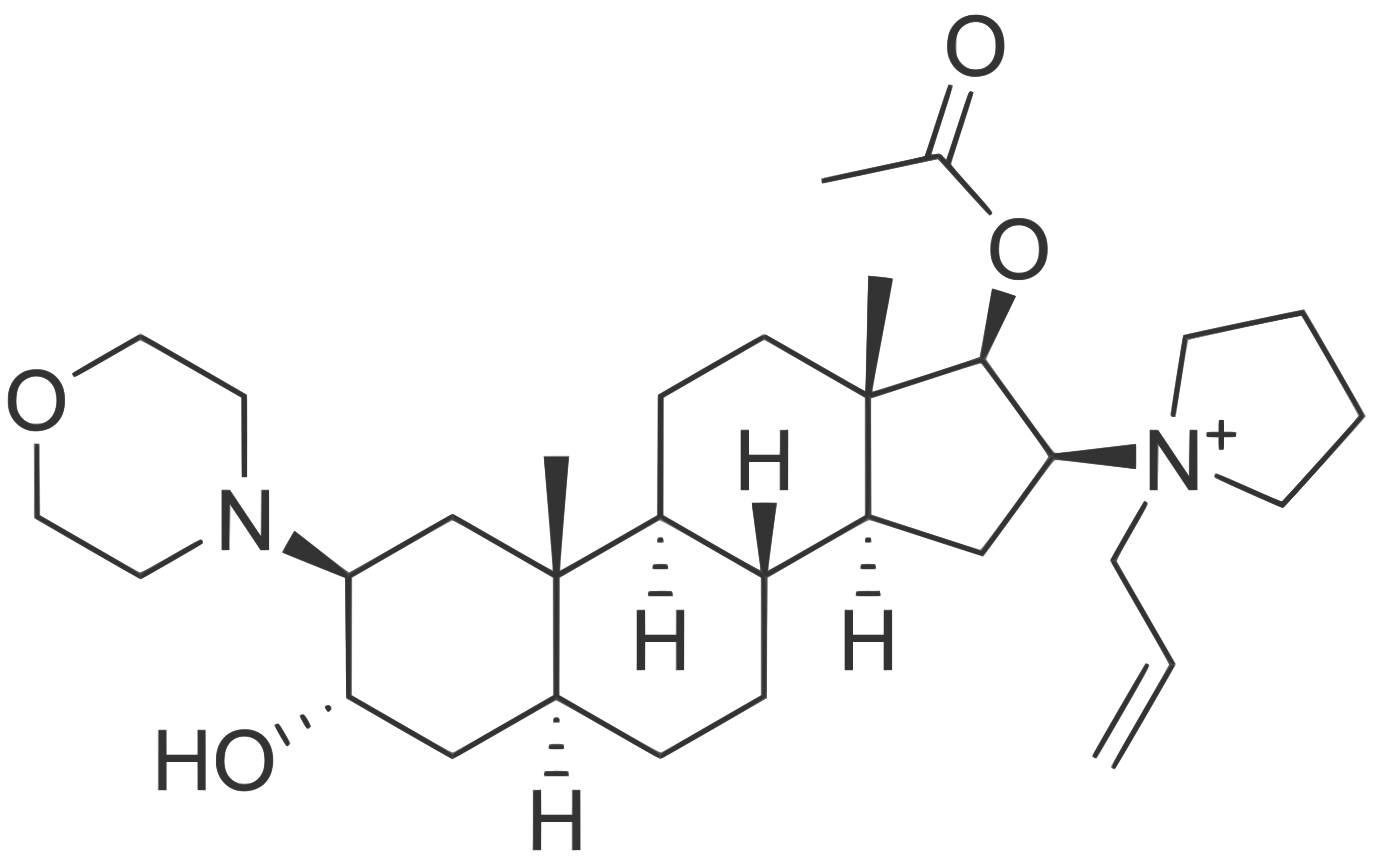
1-[17β-(acetyloxy)-3α-hydroxy-2β-(4-morpholinyl)-5α-androstan-16β-yl]-1-(2-propenyl)pyrrolidinium bromide
Formulation
Rocuronium is a water-soluble aminosteroid. Unlike propofol’s lipid emulsion, it dissolves cleanly in aqueous solution and is supplied as a clear, colorless liquid at 10 mg/mL. It’s slightly acidic (pH ~4) to maintain stability. One packaging detail that has caused real harm: rocuronium’s vials are nearly identical in size and labeling to other OR drugs, which has contributed to wrong-drug errors. The 10 mL vial looks a lot like vecuronium, and in some systems it can be mistaken for neostigmine or ephedrine.
Key Properties
- Quaternary ammonium compound, meaning it’s highly ionized and water-soluble. That charge is the reason it cannot cross the blood-brain barrier, which is why it paralyzes muscles without affecting consciousness.
- Hepatic disease can meaningfully prolong its duration.
- Steroidal backbone (derived from the androstane scaffold). It’s the structural reason sugammadex works: sugammadex was designed as a “cage molecule” that wraps around aminosteroid NMBAs specifically.
Chemical Structure
Background
History
The history of rocuronium is really a chapter in a longer story about making paralysis controllable. The original neuromuscular blockers, curare derivatives from the 1940s, were unpredictable, long-lasting, and difficult to reverse. What followed was decades of chemists tweaking the steroidal scaffold to get faster onset, shorter duration, and fewer side effects. Rocuronium was the end product of that optimization, and it eventually earned a second life when sugammadex gave anesthesiologists a way to reverse it almost instantly.
1960s
Pancuronium is developed by Organon, a Dutch pharmaceutical company, as a longer-acting non-depolarizing NMBA. It works well but lasts too long (60–90 min) and causes tachycardia via vagal blockade. The search begins for a faster, cleaner version.
1988
Organon synthesizes rocuronium bromide (then called ORG 9426) by modifying the pancuronium scaffold, reducing the potency, and adjusting the binding kinetics to produce a faster onset at clinically useful doses. Lower potency turns out to be the key to speed: a higher number of molecules must be delivered to saturate receptors quickly.
1994
FDA approves rocuronium (Zemuron) for use in the United States. It rapidly earns a place as the go-to non-depolarizing NMBA, particularly for rapid-sequence intubation. For patients with contraindications to succinylcholine (burns, crush injuries, hyperkalemia risk), rocuronium at 1.2 mg/kg becomes the alternative.
2008
Sugammadex (Bridion) receives European approval. It’s the first drug designed specifically to reverse rocuronium (and vecuronium) by encapsulating the molecule in a cyclodextrin ring and pulling it out of the neuromuscular junction. It effectively makes rocuronium fully reversible at any depth of block, transforming the risk calculus of RSI.
2015 to Present
The FDA approves sugammadex in the U.S., completing the rocuronium and sugammadex pairing. Many institutions begin preferring rocuronium over succinylcholine for RSI precisely because the block is now fully reversible. The era of truly controllable neuromuscular paralysis arrives, though the medicolegal landscape around residual block, awareness, and anaphylaxis continues to evolve.
Pharmacology
How It Works
Every voluntary muscle movement starts the same way. A motor neuron fires an action potential and releases acetylcholine (ACh) into the neuromuscular junction. ACh diffuses across the synaptic cleft and binds to nicotinic acetylcholine receptors (nAChRs) on the muscle’s motor end plate. Those receptors are ligand-gated ion channels: when two ACh molecules bind (one to each α-subunit), the channel opens, sodium rushes in, and the muscle depolarizes and contracts.
Rocuronium is a competitive antagonist at those α-subunits. It binds the same sites ACh uses, but doesn’t open the channel. It just sits there and blocks. With enough rocuronium occupying receptors, ACh can no longer trigger depolarization no matter how hard the motor neuron fires, and the result is flaccid paralysis of all skeletal muscle.

Because rocuronium is a quaternary ammonium compound and highly ionized, it cannot cross the blood-brain barrier, so it has zero direct effect on the central nervous system. The patient is awake and aware if no sedative is on board. The muscles simply do not respond.
As the drug redistributes and is cleared by the liver, plasma concentration falls, and the equilibrium gradually shifts back toward ACh. Spontaneous recovery is just the drug leaving the receptor. At standard intubating doses (0.6 mg/kg) this takes 30 to 60 minutes. At RSI doses (1.2 mg/kg), duration extends to 60 to 90 minutes, which is exactly why sugammadex availability matters in a “can’t intubate, can’t oxygenate” scenario. Neostigmine won’t reliably reverse a deep block, but sugammadex will.
Dosing at a Glance
Standard intubation: 0.6 mg/kg · RSI: 1.2 mg/kg · Maintenance: 0.1–0.2 mg/kg boluses · Onset (RSI dose): ~60 seconds · Duration (RSI dose): 60–90 min · Reversal: sugammadex 16 mg/kg (immediate) or 4 mg/kg (moderate block)
Anesthetic Practice
Clinical Application
Rocuronium gets used everywhere from routine OR intubation to emergent airway management in the ED and ICU. The common thread in every use case: the provider has made a deliberate decision to remove the patient’s ability to breathe on their own, and accepts full responsibility for the airway until paralysis resolves or is reversed.
- Rapid-sequence intubation (RSI): This is rocuronium’s defining role. In RSI, the goal is to go from awake patient to secured airway as fast as possible, typically in patients at aspiration risk who can’t be safely mask-ventilated during induction. At 1.2 mg/kg, rocuronium achieves intubating conditions in about 60 seconds, comparable to succinylcholine, without triggering the life-threatening hyperkalemia that makes succinylcholine dangerous in burn, crush, denervation, or prolonged immobility patients.
- Standard endotracheal intubation: For elective cases, a lower dose (0.6 mg/kg) gives good intubating conditions within 90 to 120 seconds with a more manageable duration of block. This is the bread-and-butter use in general anesthesia, relaxing the jaw, vocal cords, and pharynx enough to allow laryngoscopy without patient movement or laryngospasm.
- Surgical relaxation: Certain procedures (laparoscopic surgery, abdominal surgery, microsurgery) require the patient’s muscles to be continuously relaxed so that movement doesn’t disrupt the operative field. Rocuronium is given as intermittent boluses or occasionally a continuous infusion, with neuromuscular monitoring (train-of-four) guiding re-dosing.
- Difficult airway rescue: In a “can’t intubate, can’t oxygenate” (CICO) emergency, rocuronium at high dose can be given and then immediately reversed with 16 mg/kg of sugammadex if the intubation fails, theoretically returning the patient to spontaneous ventilation within minutes. This “roc-and-reverse” strategy is controversial in practice but supported in some difficult airway guidelines as a last resort.
- ICU neuromuscular blockade: In critically ill patients on controlled ventilation (severe ARDS, refractory status epilepticus, elevated intracranial pressure), a continuous rocuronium infusion suppresses patient-ventilator dyssynchrony. This requires deep sedation and analgesia to be in place first; paralysis without adequate sedation in the ICU is a recognized source of iatrogenic psychological trauma.
Body-Wide Effects
- Cardiovascular: Rocuronium has minimal hemodynamic effects at clinical doses, a meaningful advantage over older NMBAs like pancuronium (which caused tachycardia) or atracurium (which released histamine). At very high doses there is a mild sympathomimetic effect from vagal inhibition, producing a slight heart rate increase. It does not cause histamine release at standard doses, though anaphylaxis remains a distinct and serious risk.
- Respiratory: Complete dose-dependent apnea. The diaphragm, intercostal muscles, and accessory muscles of breathing are all skeletal muscle, and rocuronium paralyzes them without exception. Once a full intubating dose is administered, the patient cannot breathe. This is the defining clinical reality of NMBAs: the provider must be ready to oxygenate and ventilate the patient from the moment of injection until spontaneous ventilation is restored or confirmed by neuromuscular monitoring.
- CNS: None, by design. Rocuronium does not cross the blood-brain barrier and has no sedative, analgesic, or amnestic properties. A patient can be fully alert, feel pain, hear conversation, and form memories while completely paralyzed if adequate anesthesia or sedation is not maintained. This is not a theoretical concern. Intraoperative awareness under NMBA is a documented phenomenon with lasting psychological consequences.
- Contraindications: Myasthenia gravis and other neuromuscular junction diseases (Lambert-Eaton, congenital myasthenic syndromes) produce exaggerated, prolonged block due to pre-existing receptor compromise, and even small doses can cause profound, extended paralysis. Known hypersensitivity to rocuronium is an absolute contraindication. Rocuronium is the most common cause of perioperative anaphylaxis in several countries, with IgE-mediated reactions reported at an incidence of roughly 1 in 3,000 to 1 in 6,000 administrations.
Medicolegal
Litigation Themes
Rocuronium’s legal exposure flows directly from its pharmacology. Every malpractice pattern below is predictable: the drug eliminates the patient’s protective reflexes and breathing drive, creates the possibility of conscious paralysis, and produces anaphylaxis at a rate that is not trivial. Understanding the mechanism is the first step to understanding why these cases exist.
- Failed airway after RSI: RSI commits the provider to a paralyzed, apneic patient. If intubation attempts fail and mask ventilation is difficult or impossible (a CICO scenario), the clock starts immediately. Cases frequently center on whether the pre-RSI airway assessment was adequate, whether a video laryngoscope or surgical airway kit was available, and whether the team followed a structured difficult airway algorithm. The neuromuscular block makes every delay more dangerous because the patient cannot make any compensatory respiratory effort.
- Residual neuromuscular blockade and extubation injury: Extubating a patient with residual NMB is one of the most documented causes of postoperative respiratory complications. Rocuronium’s intermediate duration means block can persist subtly even when a patient appears to have recovered, especially after redosing or in patients with hepatic impairment. Plaintiffs argue that train-of-four monitoring was absent or misinterpreted, and that the standard of care required quantitative neuromuscular monitoring before extubation.
- Inadequate reversal with neostigmine: Before sugammadex was widely adopted, neostigmine (an acetylcholinesterase inhibitor) was the only reversal agent available. Neostigmine has a ceiling effect: it cannot reliably reverse deep or even moderate rocuronium block. Cases from the pre-sugammadex era, and cases where sugammadex was unavailable or not used, involve patients extubated after neostigmine who then re-paralyzed in the PACU or on the floor. The pharmacological basis of neostigmine’s failure at deep block is well-established, and using it in that context is increasingly difficult to defend.
- Intraoperative awareness under neuromuscular blockade: Because rocuronium has no CNS effects, a patient who is inadequately anesthetized but fully paralyzed may be conscious, in pain, and unable to signal distress by moving. The ASA Closed Claims database documents cases of awareness under NMBA with significant psychological sequelae like PTSD, nightmares, and severe anxiety. Claims in this category scrutinize whether depth-of-anesthesia monitoring (BIS or similar) was used, whether NMBA dosing outpaced the anesthetic plane, and whether the provider had a protocol for awareness prevention.
- Anaphylaxis and failure to prepare: Rocuronium is the leading cause of perioperative anaphylaxis in France, Norway, and Australia, accounting for over half of all perioperative anaphylaxis cases in some registries. When anaphylaxis occurs, the expected response is epinephrine, airway management, and resuscitation. Cases arise when the reaction is misidentified as bronchospasm or inadequate anesthesia, delaying epinephrine administration. Cross-reactivity between rocuronium and other NMBAs (and even with pholcodine, a common cough suppressant) means allergy history alone is insufficient pre-screening.
Best Practice
Administering rocuronium is a declaration: I am taking over this patient’s ability to breathe, and I accept full responsibility for their airway until that function is restored and confirmed. The medicolegal thread running through every rocuronium case is some version of a provider who didn’t fully reckon with that commitment: an airway not pre-assessed for RSI failure, a reversal agent not verified available before induction, a depth-of-anesthesia monitor absent in a patient receiving NMBAs, or an anaphylaxis protocol not rehearsed. Sugammadex has changed the risk calculus significantly, but only if it’s stocked, dosed correctly, and given without hesitation. The pharmacology of rocuronium is well understood. The litigation comes from the gap between knowing the drug and planning for everything it can do.
References
- Naguib M, Lien CA, Aker J. Pharmacology of neuromuscular blocking drugs. In: Miller RD, ed. Miller’s Anesthesia. 8th ed. Elsevier; 2015:958–1002.
- Srivastava A, Hunter JM. Reversal of neuromuscular block. Br J Anaesth. 2009;103(1):115–129.
- Mertes PM, Alla F, Treicbel-Guinand J, et al. Anaphylaxis during anesthesia in France: an 8-year national survey. J Allergy Clin Immunol. 2011;128(2):366–373.
- Bowman WC. Neuromuscular block. Br J Pharmacol. 2006;147(Suppl 1):S277–S286.
- Pandit JJ, Andrade J, Bogod DG, et al. 5th National Audit Project (NAP5) on accidental awareness during general anaesthesia. Br J Anaesth. 2014;113(4):549–559.